EIFS / Synthetic Stucco
EIFS Contractor in Chicagoland — Insulated Exterior Finish Systems
The stucco look with a layer of continuous insulation built into the wall.
- Free estimatesNo obligation
- Stucco & EIFSWe install both systems
- Based in Northlake, ILLocally owned
- Serving ChicagolandWest suburbs to the North Shore
The work
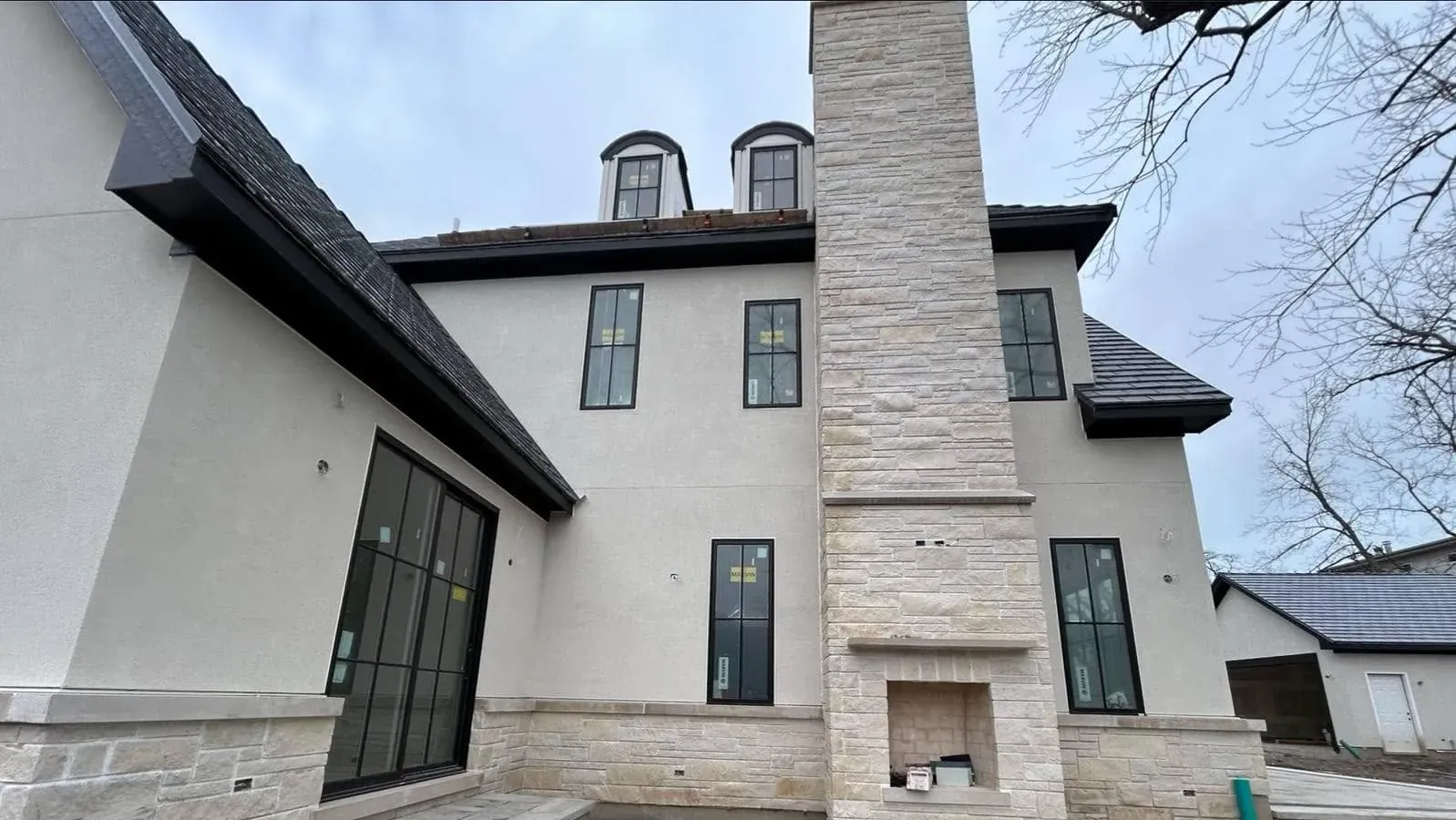
EIFS — exterior insulation and finish systems, often called synthetic stucco — is a layered wall assembly rather than a cement render. Insulation board goes over the sheathing, a base coat with embedded reinforcing mesh goes over that, and an acrylic finish coat goes on top. The result looks like stucco and carries a layer of continuous insulation across the whole wall, including the studs, where a cavity-insulated wall loses heat.
That matters in this climate. A Chicago winter puts a real load on an exterior, and wrapping the structure rather than filling between the studs is the difference you feel in January. EIFS is also lighter than three-coat stucco, which makes it the practical answer on some additions, upper stories and commercial elevations where weight is a consideration.
Our process
How an EIFS installation runs
Each stage is written down in the estimate, so you know what is happening on your house and roughly when.
Free estimate and system selection
We look at the substrate, the exposure and what you want the wall to do, then specify the right system and board thickness for it. You see a finish sample before we start.
Water-resistive barrier and drainage plane
A modern EIFS wall is drainage-type: liquid-applied or sheet barrier over the sheathing, joints and rough openings sealed, and a path for any incidental water to get back out. We do not install barrier-type EIFS on residential walls.
Insulation board
Boards are adhered or mechanically fastened, laid in a running bond, staggered at the corners, and rasped flat. Diagonal boards at window corners reduce the stress that causes cracking later.
Base coat and reinforcing mesh
Mesh is embedded in a wet base coat, lapped at the seams, with heavier mesh added at grade level and anywhere the wall takes impact.
Finish coat
The acrylic finish goes on in your chosen texture and color. Color is in the material, not painted on, so it does not need recoating the way a painted wall does.
Sealant and walkthrough
Joints, penetrations and dissimilar-material transitions are sealed with the correct backer and sealant, then we walk the elevation with you.
Why us for this
Why choose EIFS
Continuous insulation
The insulation runs across the studs instead of stopping at them, which removes the thermal bridges a cavity-only wall is full of.
Lighter than cement stucco
Useful on additions, upper floors, soffits and commercial framing where the structure was not designed for the weight of a three-coat render.
Color through the finish
The finish coat is pigmented, so a scuff does not expose a different color underneath and the wall does not need repainting on a schedule.
Shapes and detail
Bands, quoins, keystones and reveals can be cut into the insulation, so architectural detail is part of the wall rather than a trim package stuck onto it.
Detail
What to know before you specify EIFS
EIFS earned a mixed reputation in the 1990s, and it is worth knowing why — because the systems being installed now are not the ones that caused it.
- Drainage, not barrier
- Early residential EIFS was barrier-type: it relied entirely on a perfect seal. Current systems include a drainage plane behind the insulation so incidental water has a way out. That single change is what fixed the problem.
- Sealant is maintenance
- Joints and penetrations are sealed, and sealant has a service life. Inspecting it every few years is the whole maintenance program, and skipping it is how water gets in.
- Manufacturer systems
- EIFS is sold as a tested assembly rather than a bag of material — Dryvit, Sto, Parex and Senergy are the names you will see on a spec. Components are not meant to be mixed between systems, and we will tell you which assembly we would use on your wall.
- It is not right for everything
- If you want the hardness and impact resistance of cement at grade level, or your detail calls for a true render, we will say so. See our stucco-versus-EIFS comparison.
Questions
Things people ask us about this
Is EIFS the same as stucco?
No. Stucco is portland cement applied in coats over lath. EIFS is an engineered assembly of insulation board, a reinforced base coat and an acrylic finish. They can look nearly identical when finished and they behave very differently.
Does EIFS cause water damage?
Barrier-type EIFS installed over wood sheathing without a drainage plane caused real problems decades ago. Drainage-type systems, flashed and sealed correctly, do not have that failure mode. The installation detail is what matters.
Can EIFS go over my existing wall?
Sometimes. It depends on the substrate, the condition of what is behind it, and whether the window and roof details can be reworked to suit. That is an on-site conversation, and the estimate is free.
Where we work
EIFS / Synthetic Stucco across Chicagoland
Pick your town for the local detail — architecture, weather exposure and what we tend to find on houses there.
Also from us
Other services
Stucco Repair & Restoration
Crack repair, water-damage rebuilds, patch-and-blend, and full re-coats.
View serviceStucco Textures & Finishes
Smooth, sand, dash and custom textures, kept consistent across the whole elevation.
View serviceExterior Painting
Masonry-grade coatings for stucco, trim and siding, prepped properly first.
View serviceFree Estimate
Free estimate on eifs / synthetic stucco.
Tell us about the project and we will come out, look at the wall, and give you a straight number.