Traditional Stucco
Stucco Contractor in Chicagoland — Custom-Home Quality
Three-coat portland cement stucco, built up by hand and floated to the texture you pick.
- Free estimatesNo obligation
- Stucco & EIFSWe install both systems
- Based in Northlake, ILLocally owned
- Serving ChicagolandWest suburbs to the North Shore
The work
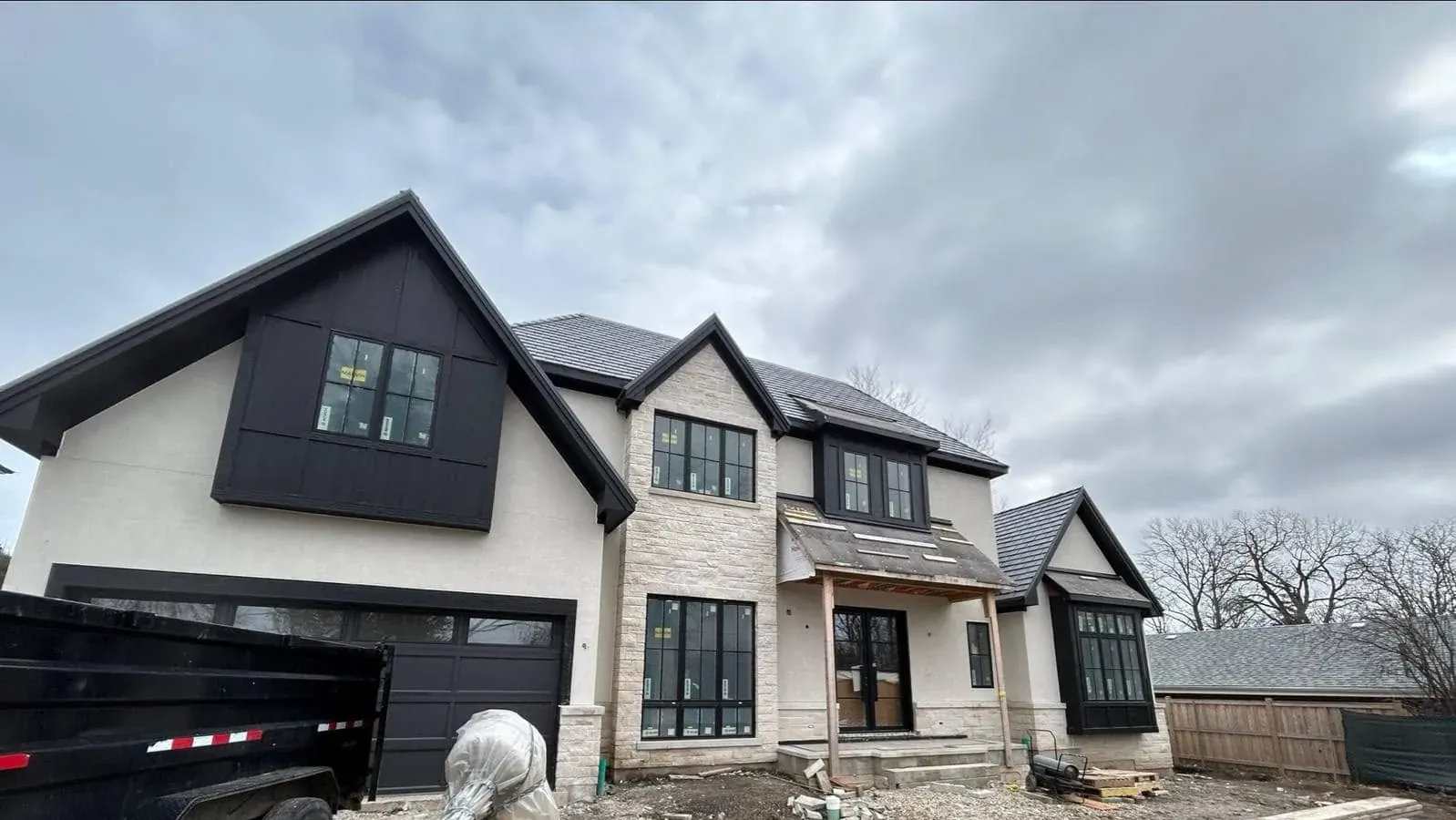
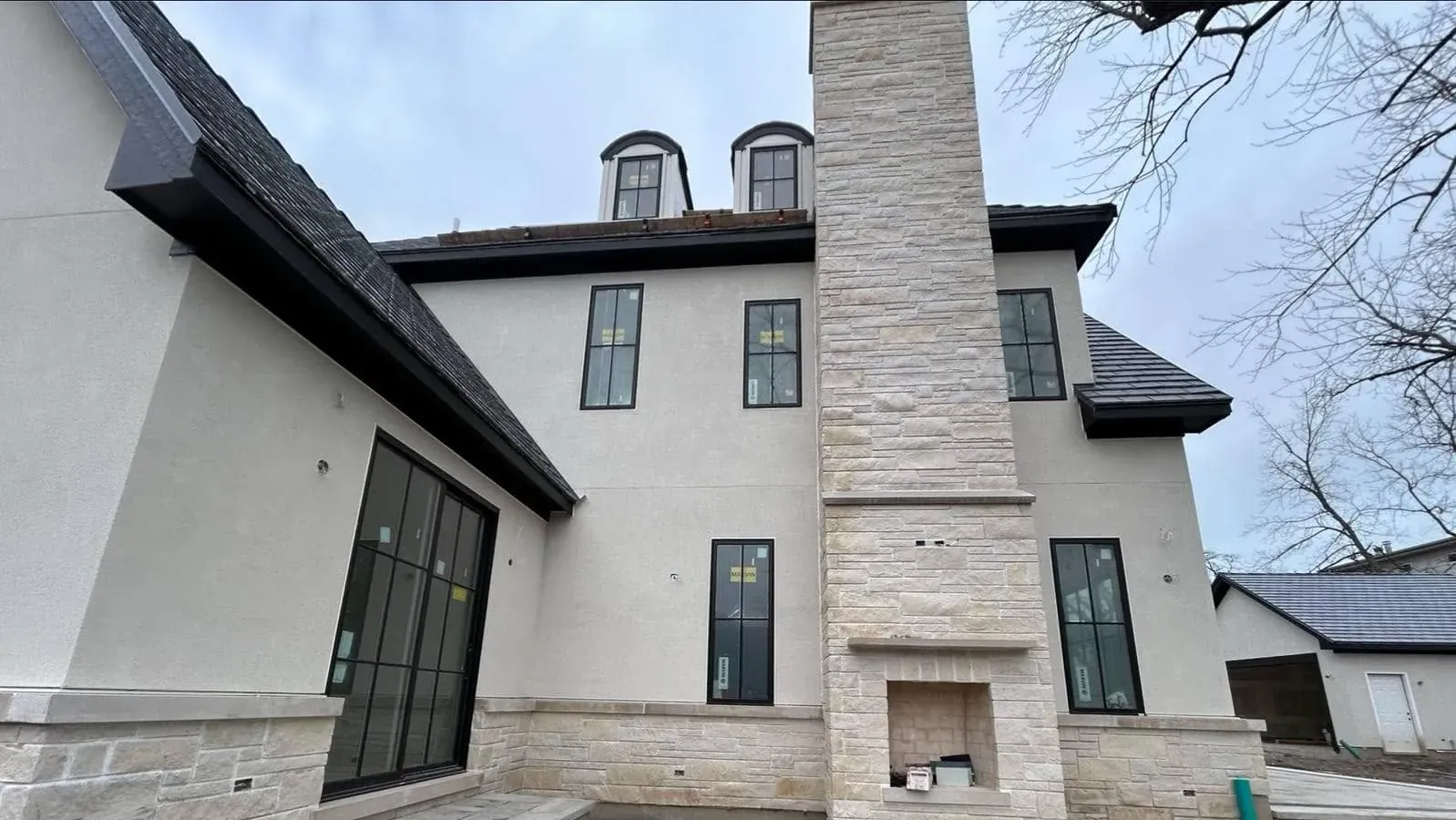
Traditional stucco is a cement product, not a coating. It is lath, then a scratch coat, then a brown coat, then a finish coat — four distinct layers that cure into a hard, dense, breathable shell over your sheathing. Done properly it is one of the longest-lived exteriors you can put on a Chicago-area house, and it is the finish you see on a great many of the high-end new builds going up across the western suburbs and the North Shore.
We install it the slow way, because that is the only way it lasts. Lath laid over a proper weather-resistive barrier and flashed at every penetration. A scratch coat keyed in and allowed to set. A brown coat rodded straight and true, then given real cure time before anything else touches it. Only then the finish coat, in the texture and color you approved on a sample board. Rushing any one of those steps is what produces the cracked, blotchy stucco homeowners call us to fix a few years later.
Our process
How a three-coat stucco job runs
Each stage is written down in the estimate, so you know what is happening on your house and roughly when.
Free estimate and sample
We walk the elevation, confirm the substrate and the detailing, and talk through texture and color. You get a written scope and a sample of the finish before anything is ordered.
Weather barrier, lath and flashing
Building paper or wrap goes on with correct laps, then self-furring metal lath, then casing bead, weep screed and flashing at every window, door, deck ledger and roof-to-wall junction. This stage is invisible when we are done and it is the stage that decides whether the wall stays dry.
Scratch coat
The first cement coat is pressed through the lath to key it mechanically, then scratched horizontally so the next coat has something to grip.
Brown coat and cure
The brown coat is rodded flat and true — this is where the wall gets its plane. Then it cures. In Chicago that means moist-curing in heat and protecting the work when the temperature drops.
Finish coat and texture
The color-integral finish coat goes on and is worked to the texture you chose — smooth, sand, dash or a custom match to an existing elevation. We keep one crew on a wall from end to end so the texture does not change halfway across.
Final walkthrough
We walk the whole exterior with you, clean the site, and deal with anything on your list before we leave.
Why us for this
Why builders and homeowners put us on stucco
A flat wall, not a wavy one
Long elevations show every dip. We rod the brown coat straight so the finish reads flat in raking afternoon light, which is when bad stucco shows itself.
Detailing that keeps water out
Weep screed at the base, casing bead at every edge, flashing and kickouts where the roof meets the wall. Most stucco failure in this climate is a detail problem, not a material problem.
Texture consistency across the whole house
Same crew, same mix, same hand. A texture that changes between the front and the side is the fastest way to make a custom home look like a budget one.
Stone and masonry coordination
Most of our work sits alongside natural stone veneer. We sequence with the mason so the transitions, reveals and water-table lines land where the architect drew them.
Detail
Textures we install
The finish coat is where the house gets its character. These are the textures we are set up to run across a full elevation.
- Smooth / fine
- A tight, almost flat finish. Modern and unforgiving — it shows workmanship, which is why it reads as expensive.
- Sand / float
- An even, lightly grained finish. A popular choice on Chicagoland custom homes and very good at hiding minor substrate movement.
- Dash
- A sprayed, aggregated texture with real depth. Durable and traditional on older local housing stock.
- Custom match
- Adding on to an existing stucco house? We work up samples until the new wall reads as the same wall.
Questions
Things people ask us about this
How long does a stucco exterior take?
It depends on the size of the elevation and the weather, because the brown coat has to cure before the finish coat goes on. We give you a realistic schedule with the estimate rather than a number we would have to walk back.
Can stucco go on in a Chicago winter?
Cement stucco needs temperatures above freezing to hydrate properly, so cold-weather work means heat, enclosures and protection — or scheduling into spring. We will tell you honestly which makes sense for your project instead of putting material on a wall that cannot cure.
Does stucco crack?
Hairline cracking can happen as a house settles; that is normal for a cement product. Structural cracking, cracking at every window corner, or cracking with staining is a detailing or installation problem, and it is most of what we see on repair calls.
Where we work
Traditional Stucco across Chicagoland
Pick your town for the local detail — architecture, weather exposure and what we tend to find on houses there.
Also from us
Other services
EIFS / Synthetic Stucco
Exterior insulation and finish systems — a continuous insulation layer under the finish.
View serviceStucco Repair & Restoration
Crack repair, water-damage rebuilds, patch-and-blend, and full re-coats.
View serviceStucco Textures & Finishes
Smooth, sand, dash and custom textures, kept consistent across the whole elevation.
View serviceFree Estimate
Free estimate on traditional stucco.
Tell us about the project and we will come out, look at the wall, and give you a straight number.